
Madagascar photo tour 2020
Duration: 15 days
Appointment: Individual planning
Participants: 2 - 8
Madagascar, already the sound of this word promises unique experiences in an unknown and exotic world. What could be more natural than to meet them with the camera. Discover with us fascinating animal species, breathtaking landscapes and a colorful culture, which is nowhere else in the world a second time. 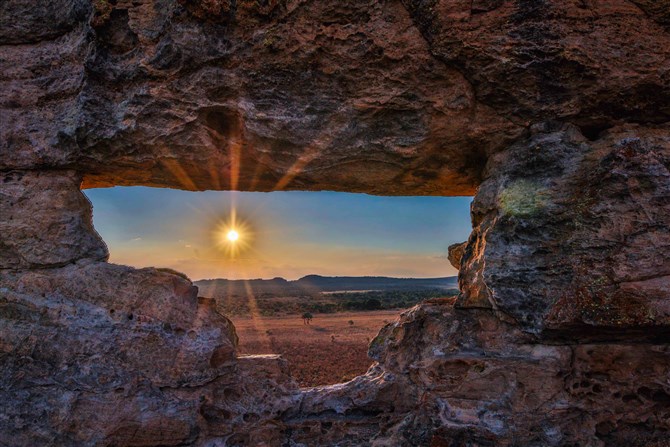 gives. A photo trip to Madagascar is a dream, and with the right partners at your side, nothing has to stand in the way of its fulfillment. The combination makes the difference: English speaking tour guides with many years of Madagascar ExperienceWe are a team of experienced nature photographers who have photographed a wide variety of subjects from all over the world and are happy to share their knowledge and skills with you. Throughout the trip you will work together with Pierre Koval professional ways to achieve the optimal image by means of theoretical and practical workshops as well as numerous image discussions.
Pierre KovalYour photo mentor will show you different approaches and in small groups techniques and working methods can be varied and analyzed in detail. To be able to immerse yourself in the working methods of two different photographers on one photo trip is unique for Madagascar and gives you perfect opportunities. Benefit from our experience, also gained as a biologist, in dealing with the unique Wildlife of Madagascar. We show you interesting life and 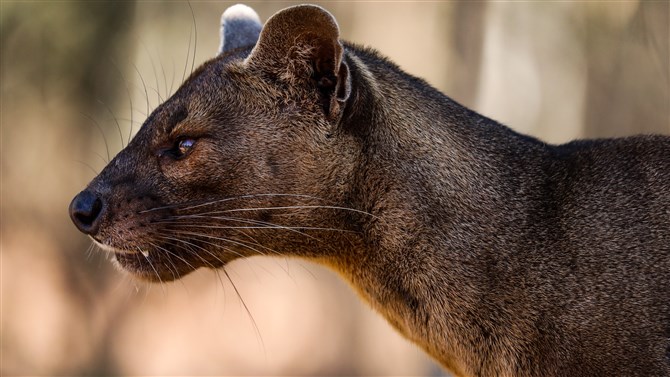 behavior of the animal species and thus make it possible to capture them in a natural way with the necessary sensitivity on a picture. Whether lemurs, reptiles or insects, the way to the perfect picture often leads through the understanding of the animal species itself. So we have more time to deal with the details and subtleties of animal photography. Whether telephoto or macro photography, we dedicate ourselves to both in detail in several practical and theoretical workshops. As diverse as the fauna of Madagascar is also the landscape, which they populate.
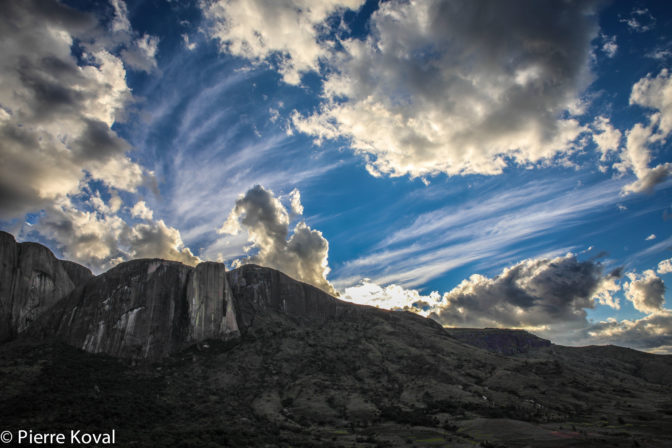
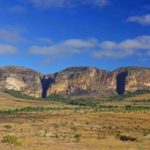
We will take you to some of the most spectacular regions of the island, where together we will highlight the most diverse aspects of landscape photography. We are the only explicit photo tour provider to offer you the opportunity to explore the remote Andringitra Massif with its perfect conditions for landscape and astrophotography. You will never forget the nights under the Milky Way in this magnificent scenery. As a wonderful counterpoint to this we will also explore the East coast beaches photographically in attack  take. In addition to long exposures, filter photography and astrophotography, their processing is not neglected. But don't worry, we won't spend hours at the PC, we both follow the approach to capture the image as optimal as possible already at the moment of shooting. However, minor adjustments are indispensable in digital photography and so we will show you how to get the best out of your shots using efficient and useful methods. In addition to the nature photography disciplines of landscape, wildlife and macro photography, we will also have the opportunity to implement aspects of travel photography with regard to people and culture. Here the Malagasy native speakers, who will accompany our trip, will help us to gain insight into the life and culture of the local population and the different tribes of Madagascar in a playful way. Experience together with us a fantastic country, whose rich nature and friendly people are nowhere else in the world.
Workshop overview
- Theory:
- Animal photography
- Landscape photography
- Practice:
- Animal photography
- Landscape photography
- Image reviews
Workshop details and contents
Day 1: Arrival in Antananarivo
After completing the visa formalities, you will be picked up by one of our guides or by us directly at the airport. Depending on the arrival time, either a hotel transfer and well-deserved rest is on the program, but if time allows, various activities are also offered.
Overnight stay in the "Villa Sibylle
Day 2: Antananarivo to Andasibe
- Wildlife Photography Theory Workshop (1): Telephoto and Super Telephoto in the Rainforest (Andasibe):
Choosing the right focal length is essential in wildlife photography. It is not always a case of "the longer, the better". We look at the effects of different focal lengths on the image and their influence on the image composition. How can I influence the focal length, what are the advantages and disadvantages of long focal lengths with regard to image composition? How do I handle telephoto and super telephoto lenses in the field? Possibilities of different autofocus modes, AF sensors, operating modes. Light measurements in extreme situations. Continuous shooting.
Day 3: Lemurs in Andasibe
- Practical workshop wildlife photography (1): telephoto and super telephoto in the rainforest (Andasibe):
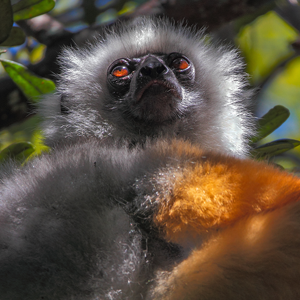
Here, in small groups of 4-6 participants, the findings of the previous day are applied in the field and deepened in individual coaching sessions. We are available the whole time with advice and support to master even photographically difficult situations. For individual shooting situations there is the possibility to test super telephoto lenses with Canon mount. The target in the morning and in the morning are the many species of lemurs, especially the largest representatives: The Indris.
- Practical workshop wildlife photography (2): Telephoto and macro photography at night in the rainforest (Andasibe):
Here, after a short briefing, small groups of 4-6 participants will set out for the night excursion. The goal is the many reptiles and amphibian species of the rainforest. Different flash techniques are illustrated with examples and the rainforest is approached in a very exciting way. For individual shooting situations there is the possibility to test macro lenses with Canon mount.
Day 4: Andasibe Rainforest
- Practical workshop wildlife photography (3): telephoto and super telephoto in the rainforest (Andasibe):
Good nature and wildlife photography lives from the opportunities that are offered to you and which you can 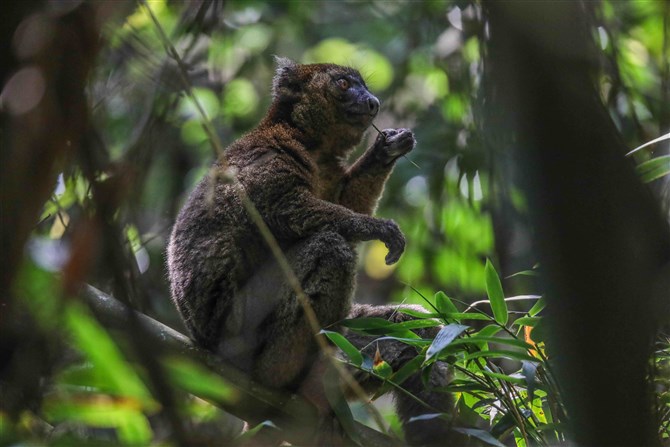 must work out. So we set off again to photograph a wide variety of lemurs and reptiles in the rainforest. All the time we are at your side with help and advice to master even photographically difficult situations. For individual shooting situations there is the possibility to test super telephoto lenses with Canon mount.
- Practical workshop wildlife photography: telephoto and macro photography at night in the rainforest (Andasibe):
By no means are all cats gray at night. We dive into the rainforest at night again and work on our flash technique. The target are the many reptiles and amphibian species of the rainforest. For individual shooting situations there is the possibility to test macro lenses with Canon mount.
Day 5: Andasibe
- Image review: wildlife photography (Andasibe):
We'll sift through your best work from the last few days together and discuss the results constructively on the big screen. What really gets you ahead is constructive criticism. What is already going well, what can you still work on the next few days and especially how? Solution-oriented approaches will bring your photography to the next level and we will also have time to learn some exemplary editing steps and possibilities.
- Theory workshop landscape photography: long exposure and filter photography (east coast):
Landscape photography needs rest and time. We will first deal with the relevant technical aspects such as focal length, focusing, camera modes, tripod, exposure assessment via histogram, possibilities of using filters and then move on to creative aspects such as image composition, eye tracking, long exposure.
Day 6: Andasibe-Ankan'y Nofy
- Landscape photography practice workshop: sunrise and sunset on the river and sea (east coast):
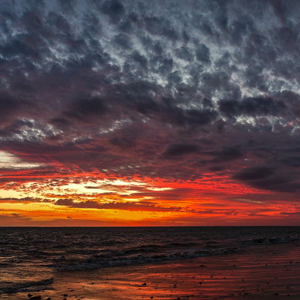
Here, in small groups of 4-6 participants, the findings of the previous day are applied in the field and deepened in individual coaching sessions. We are available the whole time with advice and support to master even photographically difficult situations. We will start at blue hour at the sea and will capture the bright, soft colors of the sunrise in combination with wonderfully soft water on the sensors. At sunset, we will deal with reflections at the Canal de Pangalanes and set up our tripods for the most diverse viewing angles.
- Photo trip on the Canal de Pangalan (east coast):
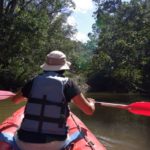
From the river you have a very unique view of the land and wildlife. We set off for a relaxed photo safari along the Canal de Pangalan. Whether with the telephoto lens permanently at the ready or for relaxed observation of nature, the Canal is unique.
Day 7: Ankan'y Nofy
- Landscape Photography Practice Workshop: Sunrise and Sunset on the River and Sea Part 2 (East Coast):
Every day is different and so is every sunrise and sunset. We use the dreamlike location for new 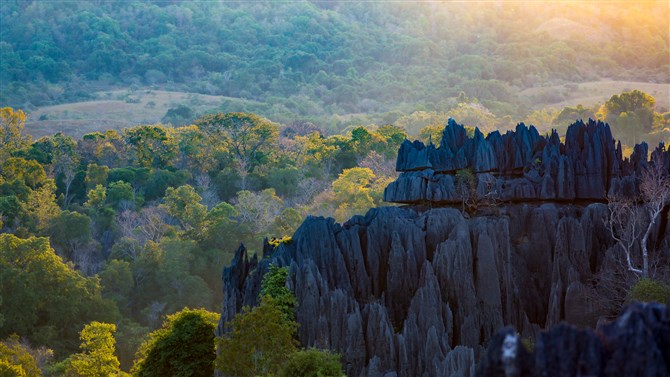 Image ideas and, to create different image looks by playing with exposure time and light. We will explore both the coast to the Indian Ocean and the mangroves of the Canal de Pangalan.
- Practical workshop wildlife photography: telephoto and macro photography in the Wildlife Reserve (East Coast):
We will roam in small groups of 2-6 participants through the private reserve directly at the canal and will have the opportunity to photograph numerous representatives of the Madegassian wildlife such as lemurs and reptiles. We will hone your shooting techniques and implement interesting image ideas. For individual shooting situations there is the possibility to test macro and super telephoto lenses with Canon mount.
Day 8: Ankan'y Nofy - Antananarivo
- Image review: landscape and wildlife photography (Tana):
We'll sift through your best work from the last few days together and discuss the results constructively on the big screen. What really gets you ahead is constructive criticism. What is already going well, what can you still work on the next few days and especially how? Solution-oriented approaches will bring your photography to the next level and we will also have time to learn some exemplary editing steps and possibilities.
Day 9: Antananarivo-Fianarantsoa
- Theory workshop animal photography and macro photography (Andringitra):
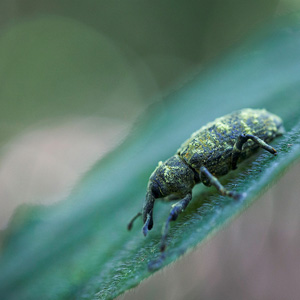
We look closely. Imaging scales in the macro range open up an exciting world whose pitfalls you have to know in order to skilfully stage them. What technical hurdles must be overcome? Image composition in the microcosm. Less is more: selective focus points. Conscious use of different lighting situations.
Day 10: Fianarantsoa - Tsaranoro Mountains
- Theory workshop landscape photography: night and astrophotography (Andringitra):
Modern camera technology, with its light-sensitive sensors, enables us to photograph scenes which are 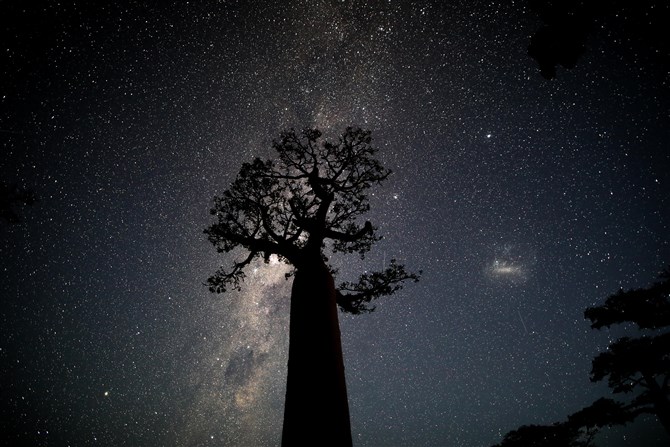 in their brilliance were hardly conceivable in analog times. Even if fast wide-angle lenses can show their strength here, a lot can also be done with slower lenses on today's cameras. What limits does physics set for me? How do I focus at night? How do I get everything as sharp as possible despite an open aperture? Bulb mode: How long is long enough? Understanding aperture, time and ISO. How do I find the Milky Way?
- Practical workshop landscape photography: night and astrophotography (Andringitra):
Right after dinner we start: We are here in one of the places with the least light pollution ever and thanks to the absence of the moon (new moon), there are perfect opportunities to see the Milky Way even with the naked eye and of course to immortalize it on the sensor of our cameras. And all this against the breathtaking backdrop of the Andringitra Massif!
Day 11: Andringitra Massif
- Landscape photography practice workshop: sunrise and sunset in Andringitra Massif:
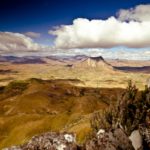
With our cameras and tripods we await the dawn in the Andringitra Massif. In addition to wide-angle shots, the mountain landscape is also perfect for capturing sections of the landscape in perfect light with a telephoto lens. We will work with exposure bracketing to get a grip on these light moods without a gray graduated filter. Practice makes perfect and so we will also deal with different image angles in landscape photography at sunset.
- Practical workshop wildlife photography: telephoto and macro photography in Tsaranoro Valley (Andringitra):
We roam the Tsaranoro Valley, a foothill of the Andringitra Massif, in small groups of 2-6 participants. On the trail of the Kattas (ring-tailed lemurs) we can hone our telephotography skills, before we 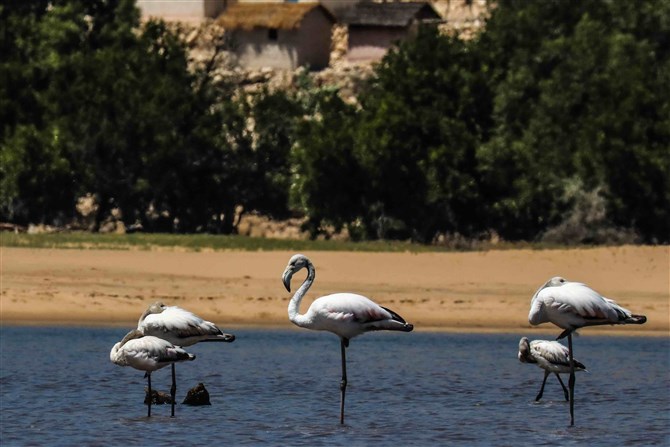 then in the middle of the forest in a small cave we will encounter a recently discovered reptile from the gecko family with our macro lenses. Here we will deal with focus stacking in practice and back in our lodge we will learn the processing steps for it. For individual shooting situations there is the possibility to test macro and super telephoto lenses with Canon mount.
Day 12: Pic Chameleon Tsaranoro
- Landscape photography practice workshop: panoramas from Peak Chameleon and/or west flank of Andringitra Massif:
Depending on the weather, we set off for Peak Chameleon and/or the southern flank of the Andringitra Massif. We take advantage of the breathtaking view to get into panoramic photography. Which camera settings are necessary? How many pictures at which focal length? What is the nodal point and when is it important? Creation of panorama-ready raw data? Panorama accessories? Back at our lodge, we will then look at software-based stitching of our panoramas.
- Landscape photography practice workshop: night and astropanoramas (Andringitra):
Right after dinner we now combine our freshly acquired panoramic skills with astrophotography. The low light pollution in the Andringitra massif and the absence of the moon in the early night hours allow us to immortalize the Milky Way stretching across the sky from one end of the horizon to the other in a panorama. Of course, we will be at your side all the time to help you master even this photographically challenging task. Focusing at night? Earth rotation and shooting time? Stacking and stitching?
Day 13: Tsaranoro-Anja Park-Ambalavao
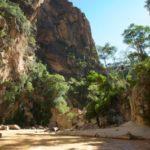
- Practical workshop wildlife photography: telephoto and macro photography in Anja Reserve:
We roam in small groups of 4-6 participants through the Anja Reserve, an offshore mountain range of the 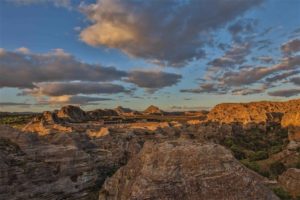 Andringitra Massif. For telephotography we go in search of kattas (ring-tailed lemurs), we search the leaf litter layer for dwarf chameleons, perfect animals to improve our focus-stacking qualities. We will also practice this on various succulents ("cacti") on the rocky plateaus. Further contents of this workshop are image composition and image composition with open aperture. For individual shooting situations there is the possibility to test macro and super telephoto lenses with Canon mount.
- Practical workshop landscape photography: panoramas and sunset (Anja Reserve):
We use the views from the rocky plateaus on our hike through Anja Reserve to combine the use of filters in landscape photography with panoramic techniques. When the golden evening sun bathes the boulders in the landscape in golden light, our sensors will cheer with joy.
Day 14: Ambalavao-Antananarivo
- Image review : Macro and astrophotography (Antsirabe):
We'll sift through your best work from the last few days together and discuss the results constructively on the big screen. Constructive criticism is what really gets you ahead. What should you pay attention to in the future? Clarification of open questions? Solution-oriented approaches will bring your photography to the next level and we will also have time to look at some exemplary editing steps and possibilities.
Day 15: Antananarivo and surroundings
- Day at leisure (Tana):
After two weeks of looking through the viewfinder, on the day of departure it is time to take in the country and its people without a camera. There are various excursion destinations available such as the former royal palace of Madagascar: The Rova, a crocodile farm, a lemur park, etc.. Of course, you can also use the time to relax and prepare for the flight home in peace.
- Image review: "Best of" and feedback (Tana):
Finally, we'll review your best work from the past two weeks and discuss the results constructively on the big screen. What really gets you ahead is constructive criticism. How has your style of photography developed over the past 2 weeks? What is still unclear? Where do I go from here? What do I do with the acquired knowledge at home? Solution-oriented approaches will take your photography to the next level and we will also have time to look at some editing steps and possibilities as examples.
Price per person in Bed & Breakfast:
| 2 guests | 3780 | € |
| 3 guests | 3660 | € |
| 4 guests | 3590 | € |
| 6 guests | 3490 | € |
| 8 guests | 3460 | € |
For the provision of a single room, a total surcharge of 690.00 euros will be charged.
The services included in the basic price
- complete planning and logistics
- German escort and tour guide
- 1 experienced workshop leader/mentor
- High quality vehicles including driver and fuel
- all nights in the specified hotels
- Catering concerning breakfast
- Transfers, taxes and trips specified in the program
Services not included in the basic price
- Lunch, dinner and drinks as well as other individual catering
- Tips and all personal expenses
- Entrance fees for the national parks and private parks
- additional local guides and optional leisure activities
- Airfares for international flights and domestic flights
- Taxes for flights as well as airport fees
- Travel health insurance and travel cancellation insurance
- Visa costs (currently not applicable)
Recommended photo equipment
If you have any questions about the equipment listed here or if you are not sure if your equipment belongs here, please feel free to contact us. We can give you individual advice and assessment of your equipment in terms of suitability for this photo trip.
- Photo backpack and rain cover. We will be walking in the national parks on partially paved trails, as well as cross-country. A backpack is more suitable than a photo bag. Depending on the amount of photo equipment to be transported, both are also possible.
- Digital SLR camera, mirrorless system camera, SLT camera or high-quality bridge camera, regardless of whether full-frame or crop cameras (APS-C, MFT or other sensor sizes). The only important thing is that parameters such as aperture, shutter speed, sensor light sensitivity (ISO) and autofocus can also be set manually.
- Manual of your camera. We can't possibly know all the menu items and submenu options with the multitude of manufacturers and models in the fast-paced photography industry. Even if you think you know your camera well, here and there we will dive into the depths of the camera settings and menu structures, for which a manual is worth its weight in gold.
- Wide-angle and/or ultra-wide-angle lens with focal lengths relative to 35 mm format (full frame) of approx. 16-24 mm. The following are some examples of possible lenses: 16-35 f/4, 16-35 f/2.8, 17-40 f/4.0, 14-24 f/2.8 for full frame or 12-24 f/4, 11-22 f/4-5.6, 10-18 f/4.5-5.6, 10-20 f/4.5-5.6, 10-20 f/3.5, 11-16 f/2.8 for APS-C or 10-24 f/4.0, 9-18 f/4-5.6, 12 f/2, 7-14 f/4, 7.5 f/2 for MFT. This list is not exhaustive and any lens that falls within the white angle range can be used, whether zoom or fixed focal length.
- Telephoto and/or super telephoto lens with focal lengths relative to 35 mm format (full frame) of approx. 100-400 mm ( -600 mm). The following are some examples of possible lenses: 70-200 f/4, 70-200 f/2.8, 70-300 f/4-5.6, 50-500 f/4.5-6.3, 100-300 f/4-5.6, 100-400 f/4.5-5.6, 300 f/4, 300 f/2.8, 400 f/5.6, 55-200 f/4-5.6, 55-250 f/4-5.6, 150-600 f/5-6.3. This list is not exhaustive and any lens that falls within the (super)telephoto range can be used, whether zoom or fixed focal length.
On crop cameras such as APS-C or MFT, focal lengths of up to 200 mm or 300 mm are often sufficient because of the extension factor; on full-frame cameras, 400mm or even 600mm can be useful. Alternatively, teleconverters can be used with fast lenses (e.g. 70-200 f/2.8 with 1.4x or 2x converter).
- Macro or macro-capable lenses (reproduction scale 1:2 - 1:4) and/or macro aids such as close-up lenses, extension rings or retro adapters. Macro fixed focal lengths such as a 60 f/2.8, 100 f/2.8, 105 f/2.8 or 150 f/2.8 are ideal here, but telephoto lenses with macro capabilities (reproduction scale 1:2 - 1:4, for example 70-300 f/4-5.6, 300 f/4, 70-200 f/4, 17-70 f/2.8 macro) can also be used here, if necessary with extension rings or close-up lenses.
- External flash unit to attach to the camera, as well as a cable (or radio transmitter) for unleashed flash, if necessary also a short flash rail and bouncer and/or mini softbox/diffuser
- Several camera and flash batteries, and their chargers.
- Sufficient memory cards and optional backup system (image-tank, laptop with card reader and external hard drive).
- Cleaning brush with bellows and optical cleaning cloths.
- Tripod with ball head or tilt head and optional L-angle for easier handling. Depending on the camera-lens combination to be mounted, it can be a light travel tripod or a heavier large tripod. The tripod does not have to be dragged along permanently, but is used at special locations.
- Programmable remote shutter release, whether radio or cable. The important thing is that it can control long exposures.
- Optional, but recommended, a filter system for, for example, 100 mm rectangular filters including gray graduation and ND filters, as well as polarizing filters if necessary. Depending on the camera system used, 75 mm or 150 mm rectangular filters are also suitable. We would be happy to advise you on a cost-effective and sensible starter package for system filter photography. Please feel free to contact us in this regard. If you do not have a system filter set, you should at least bring screw filters for your wide-angle lens (ND and polarizing filters), even if you then have to forego the use of gray graduated filters. For individual shooting situations, it may be possible to test gray graduated filters with a system filter set.
- Optionally a standard lens with focal lengths related to the 35 mm format (full frame) of approx. 50 mm. The following are some examples of possible lenses: 50 f/1.8, 50 f/1.4, 24-105 f/4, 24-70 f/2.8, 17-70 f/2.8-4 or 35 f/1.4, 30 f/1.4 also on crop cameras. This list is not exhaustive and any lens that falls within the standard focal length range can be used, whether zoom or fixed focal length.
- Optionally a fast (ultra)wide angle lens such as 16-35 f/2.8, 14-24 f/2.8, 24 f/2.8, 24 f/1.4, 20 f/2.8, 20 f/1.4, 16 f/1.4, 15 f/2.4, 14 f/2.8, 12 f/2.8, 12 f/2, 12 f/1.4, 10 f/2.8, 7.5 f/2. This list is not exhaustive and any (ultra)wide-angle lens with f/2.8 or better can be used, regardless of whether it is a zoom or a fixed focal length, including completely manual lenses without autofocus.
Nature photography remarks
All photo spots, locations and workshop contents are, based on our many years of experience as a  Nature photographers and Madagascar travelers, carefully planned. Nevertheless, the factor of nature in nature photography also remains a bit unpredictable. Therefore, we reserve the right to change the schedule and the order of the workshops in exceptional cases. For example, if the weather does not permit various landscape photographs on the planned day, routes are impassable or certain species of wildlife cannot be found on the respective day. We have planned enough leeway in the time schedule and alternative locations, both for the wildlife and the landscape photography workshops, so that even in extreme cases all content can be taught and trained in practice. We are looking forward to you and unforgettable days in Madagascar.

 English
  Deutsch
  Villa Sibylle Antananarivo (Madagascar)